
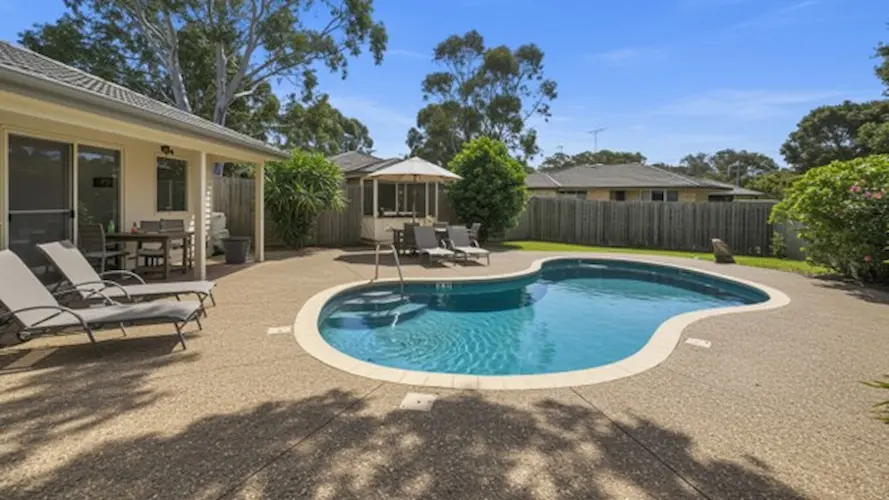
The kidney-shaped pool is an absolute staple of modern backyard architecture. Its sweeping curves and organic lines effortlessly mimic natural bodies of water, softening the harsh, rigid geometry of standard concrete patios and traditional residential landscaping. While this organic shape provides a stunning, relaxing visual aesthetic, it introduces a highly complex geometrical challenge for routine aquatic maintenance. The unpredictable curvature, varying radiuses, and complex fluid dynamics completely destroy the internal logic of traditional, randomized extraction hardware. To keep the pool floor visually pristine without requiring endless manual intervention, homeowners must abandon outdated mechanical technology and rely on a smart robotic pool cleaner capable of actively mapping and memorizing irregular aquatic environments.
Table of Contents
The Navigational Trap of the Concave Curve
To understand exactly why advanced digital navigation is absolutely required for this specific pool shape, you must first understand why basic automated machines fail so spectacularly. A kidney pool is defined by its distinct inward bend—the concave curve. Older, baseline maintenance equipment relies entirely on simple mechanical deflection to navigate the underwater terrain. The machine drives forward until it physically hits a vertical wall, reverses its motors, turns at a fixed mechanical angle, and drives forward again. In a perfectly rectangular pool, this randomized, bouncing trajectory will eventually cover the entire floor through sheer, inefficient persistence.
However, the concave curve of a free-form shape acts as a severe, inescapable navigational trap. When a “blind” machine drives into this inward curve, the fixed-angle turn is no longer sufficient to escape the bend. The machine hits the wall, turns slightly, and immediately hits the exact same curved wall just a few feet away. It becomes caught in an endless mechanical loop, ping-ponging back and forth within a tiny five-foot radius.
Furthermore, the fluid dynamics of a kidney-shaped pool naturally funnel heavy debris directly toward this specific curve. Water currents from your return jets sweep along the outer convex wall and push heavy sand, sunken leaves, and dead algae right into the center of the inward bend, creating a localized eddy where dirt drops out of suspension. Consequently, a blind machine will exhaust its entire battery life aggressively scrubbing the tightest section of the pool, leaving the deep hopper and the opposite walls completely buried in abrasive particulate and hazardous organic debris.
The Mechanics of Digital Spatial Awareness
Navigating a chaotic, free-form environment requires genuine digital spatial awareness. Advanced extraction equipment completely abandons the outdated mechanical bumper system in favor of highly sensitive internal gyroscopes, digital accelerometers, and sophisticated algorithmic processors.
When you deploy one of these modern units into a kidney-shaped pool, it does not immediately drop to the floor and begin a random vacuuming cycle. Its very first action is to execute an exploratory perimeter scan. The machine carefully traces the physical boundaries of the plaster, using its internal gyroscope to measure the exact severity of the curves, the angle of the slopes, and the total distance from the shallow entry steps to the deep end hopper. The internal processor compiles this raw physical data to generate a highly precise, invisible digital map of the irregular footprint.
Once the digital boundary is firmly established in the machine’s memory, the hardware shifts its operating parameters from exploration to active execution. It uses the digital map to calculate a highly systematic, overlapping grid pattern. Instead of reacting blindly to walls upon impact, the machine anticipates the sweeping curves before it even reaches them. It drives in perfectly parallel lines across the floor, actively slowing down just before reaching the curved walls, and executing calculated, efficient turns that ensure not a single section of the convex or concave perimeter is missed.
Addressing Unique Architectural Friction Points
While the internal computer handles the heavy computational lifting of pathfinding, the homeowner must still optimize the operating environment to match the specific terrain of their backyard oasis. Kidney pools are rarely just flat holes filled with water; they frequently feature unique architectural additions nestled directly into the curves. These features require specific mechanical awareness to prevent the hardware from becoming physically stranded or trapped by conflicting hydraulic forces.
Understanding the genuine physical limitations of aquatic hardware allows you to address friction points logically, preventing frustrating operational errors before they occur.
| Architectural Feature | Primary Navigational Hazard | The Logical Mechanical Solution |
| Shallow Tanning Ledges | The hardware breaches the surface, sucks air into the impeller, and physically beaches itself on the dry ledge. | Advanced units utilize anti-beaching algorithms; when sensors detect a sudden loss of water resistance, the tracks instantly reverse to retreat to deeper water. |
| Domed Main Drains | Anti-entrapment drain covers are highly elevated. The machine can high-center its chassis on the dome, creating a dual-suction trap where it cannot break free. | Equip hardware with dual-drive motors. This allows the left and right tracks to spin independently, rotating the chassis off the dome to break the suction seal. |
| Steep Transition Slopes | The sharpest curve often aligns with the steepest drop-off. The machine loses its mechanical grip and slides backward into the deep end hopper. | Ensure the rubber drive tracks are completely free of slippery organic grease and algae biofilm to maximize the machine’s hydrodynamic downforce and physical traction. |
Custom Calibration for Flawless Routing
Even with a perfect digital map and an awareness of architectural hazards, a free-form pool presents unique physical conditions that you must proactively manage. To ensure your customized, gyroscopic route executes flawlessly every single time you press the start button, you must prepare the physical environment. Implement the following sequence before deploying the hardware:
- Standardize the Deployment Zone: Gyroscopic mapping relies heavily on physical orientation. If you drop the machine into the deep end on Monday and the shallow end on Thursday, the processor must waste valuable battery life re-orienting itself against its saved map. Always deploy the machine from the exact same physical location on the pool deck to establish a consistent starting point.
- Manage the Circulation Pump for Gravity Settling: Turn your primary circulation pump to a low-speed setting, or shut it off entirely, before initiating a cleaning cycle. This achieves two critical goals. First, it allows suspended fine dirt to settle completely onto the floor where the robot can vacuum it. Second, it drastically reduces the active vacuum pull of the main floor drain, preventing the robot from fighting against the pool’s primary plumbing system as it passes over the deep end.
- Clear the Sweeping Steps: Multi-tiered corner steps are a massive friction point in curved pools. Ensure that floating chlorine dispensers, heavy pool noodles, and sunken dive rings are completely removed from the step area. A machine mapping a complex corner will inevitably abort its programmed path or lose its bearing if it unexpectedly collides with a heavy, waterlogged toy.
- Inspect Drive Track Elasticity: Navigating complex curves requires immense physical grip. Rubber is a consumable material that degrades over time under intense ultraviolet radiation and harsh chemical exposure. Inspect the tactile nubs on the drive tracks monthly; if the rubber feels stiff or brittle, the machine will slide sideways on the curves, entirely ruining the precision of its digital grid.
Preserving the Plaster Finish and Extending Longevity
The ultimate, long-term benefit of utilizing advanced digital navigation extends far beyond the immediate convenience of a visually clean floor; it directly impacts the structural longevity of your pool’s interior finish.
When an older, randomized machine gets hopelessly trapped in the concave curve of a kidney pool, its heavy rubber tracks spend hours relentlessly grinding against the exact same patch of delicate plaster or vinyl. Over a few short seasons, this localized, repetitive mechanical friction physically wears away the protective surface coating. This creates rough, highly porous patches in the plaster that are incredibly susceptible to stubborn, embedded black algae outbreaks and calcium scaling.
By utilizing a mapped, systematic grid, the hardware treats your pool floor with absolute mechanical respect. The machine visits every sweeping curve, steep slope, and tight corner exactly one time per cleaning cycle. The heavy dirt is efficiently extracted, the water is filtered, and the machine immediately moves on to the next sector. By embracing the power of spatial awareness and proactive environmental calibration, you can effortlessly tame the complex geometry of your free-form pool. This strategy ensures a flawless, sterile finish without ever subjecting your expensive interior to unnecessary mechanical abuse.