
Table of Contents
Key Takeaways
- Smart home technology drives buyer decisions, boosting convenience, security, and energy efficiency.
- Smart features increase property value and appeal to younger, tech-savvy buyers.
- Automation and energy-efficient devices reduce costs and enhance the quality of life.
- Investing in smart homes future-proofs properties in competitive markets.
Introduction
In today’s rapidly evolving real estate market, smart home technology is increasingly shaping buyer decisions. Homebuyers now prioritize properties equipped with advanced features that enhance convenience, security, and energy efficiency.
Smart home innovations from automated lighting and thermostats to AI-assisted security and entertainment systems are no longer optional but expected in luxury real estate. Beverly Hills real estate expert Peter Mac, affiliated with The Agency, specializes in luxury residential and investment properties in the Beverly Hills area. With over a decade of experience and a global network of high-end property connections, Peter Mac offers unmatched insights into market trends and the integration of smart technology in modern homes, making him a trusted authority for buyers and sellers alike.
Buyers rely on experts like Peter Mac to identify homes where technology not only elevates lifestyle but also enhances property value. By leveraging his deep knowledge of Beverly Hills and surrounding luxury markets, Peter Mac guides clients in selecting smart-enabled homes that meet both personal needs and investment goals.
Enhanced Property Value
Integrating smart home features can significantly boost a property’s market value. A survey by Coldwell Banker revealed that 77% of millennials are willing to pay more for homes equipped with smart features. This trend underscores the growing demand for technologically advanced living spaces.
Not only do these features attract buyers, but they also set homes apart in competitive markets. Features such as automated lighting, smart irrigation systems, and smart appliances are increasingly being seen as essential components rather than luxury add-ons. When a property showcases a comprehensive package of smart-integrated systems, it gains a unique selling proposition, making it easier for realtors to market and sell at a premium price. Furthermore, appraisal values can increase with documented energy and security upgrades, supporting higher resale returns and attracting discerning buyers who value both functionality and future-forward living.
Energy Efficiency and Cost Savings
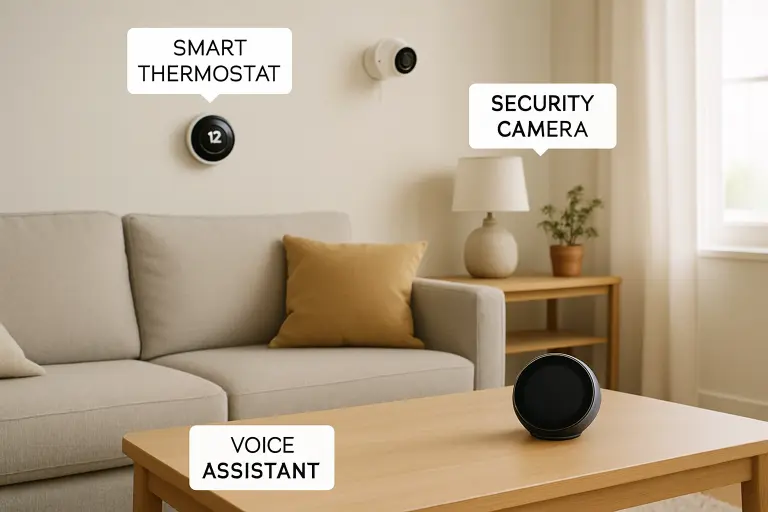
Smart devices like thermostats and lighting systems help conserve energy, leading to lower utility bills. For instance, smart thermostats can learn a household’s schedule and adjust temperatures accordingly, resulting in substantial energy savings.
Additionally, smart lighting and automated window shades can reduce electricity usage by adapting to natural light conditions throughout the day. Home energy monitors allow homeowners to track consumption in real time, identify areas where energy is wasted, and provide suggestions to optimize usage. These benefits are particularly attractive in markets where energy costs are rising, and sustainability is top of mind for buyers. Real estate professionals highlight the long-term cost savings and environmental impact as key selling points during showings, making smart energy solutions a central part of their marketing strategies.
For investors and landlords, smart energy systems can also mean lower upkeep costs and potentially higher rental values, creating a strong financial incentive to invest in these upgrades.
Improved Security Features
Modern buyers prioritize safety, making smart security systems a valuable addition. Features such as real-time video surveillance, remote access, and instant alerts provide homeowners with enhanced peace of mind.
Today’s advanced security solutions go far beyond traditional locks and alarms. Smart doorbells, facial recognition cameras, motion-activated lights, and integrated alarm systems can be monitored and controlled from anywhere via smartphone apps. These systems offer not only real-time monitoring and response but also allow homeowners to grant temporary access to service providers or guests, adding layers of convenience and safety. Furthermore, insurance companies may offer premium discounts for homes equipped with comprehensive security systems, providing an additional financial advantage to those who choose to invest in modern protection technologies.
Convenience and Automation
Smart home technology offers unparalleled convenience through automation. Voice-activated assistants and automated appliances streamline daily tasks, making homes more appealing to tech-savvy buyers.
Imagine arriving home to lights that turn on automatically, a thermostat already set to your preferred temperature, and security systems that disarm as you walk through the door. These conveniences save time and can be especially beneficial for busy professionals and families. Smart kitchen appliances, such as refrigerators that can track inventory or ovens that can be preheated remotely, bring a new level of ease to everyday life. Automated sprinkler systems and cleaning robots further demonstrate how technology can reduce household workloads. The seamless integration of these systems appeals to younger buyers and busy urban dwellers who expect their home to keep up with their lifestyle.
From automating entertainment systems to setting mood lighting for various occasions, modern smart homes allow for highly personalized living experiences that can be adjusted with just a few commands or taps on a smartphone.
Appeal to Younger Generations
Millennials and Gen Z buyers, who are accustomed to technology, often expect smart features in their homes. Properties lacking these amenities may struggle to attract this demographic.
For these tech-first generations, a property’s appeal is directly tied to its technological sophistication. Smart homes are seen not only as more convenient but also as a reflection of their values, efficiency, connectivity, and sustainability. Features such as app-based home management, integrated wireless charging stations, and electric vehicle charging outlets are often on the must-have list for younger buyers. Failure to include these features can result in homes staying on the market longer or fetching a lower sale price, as younger buyers often forego traditional properties lacking tech enhancements for cutting-edge units that promise digital integration.
Moreover, social influence plays a role, with buyers sharing their smart home features on social media, indirectly marketing the property and the agent representing it. Realtors are taking note, often highlighting smart features prominently in listings and advertising campaigns aimed at these younger, tech-savvy audiences.
Future-Proofing Investments
Investing in smart home technology ensures that properties remain competitive as technological advancements continue. Homes equipped with smart features are better positioned to integrate future innovations.
The pace of technological innovation means that homebuyers and investors must think ahead when considering upgrades. A property with a strong smart infrastructure, robust Wi-Fi, flexible automation systems, and platform-agnostic devices can easily incorporate new advancements as they emerge. This future-proofing ensures properties retain their desirability and value, even as standards shift and buyers’ expectations evolve. As the Internet of Things (IoT) ecosystem expands, homes that are already adapted to automation and connected living will transition seamlessly into the coming technological waves, whereas outdated properties risk obsolescence.
Forward-looking real estate professionals encourage clients to consider not just current smart home trends but also the adaptability of systems to easily integrate new technologies, from artificial intelligence-driven home assistants to health-focused smart sensors and remote asset management.
Smart Home Trends in Luxury Real Estate
The influence of smart home technology is particularly pronounced in luxury and high-end real estate markets such as Beverly Hills. Sophisticated buyers expect features like state-of-the-art climate control, invisible security systems, custom lighting, and centralized automation that can manage every aspect of the home environment, even from miles away.
Premium developments are promoting integrated smart systems as standard, leveraging technology to ensure privacy, efficiency, and a bespoke lifestyle for residents. In this sector, unique features such as voice-controlled wellness rooms, automated wine cellars, and immersive entertainment centers can set a property apart, creating talking points that resonate with affluent clients seeking the best of modern living.
The Role of Real Estate Professionals
Experience and expertise are crucial when evaluating the quality and scalability of smart home systems during the buying and selling process. Beverly Hills real estate expert and other seasoned professionals play an important role in guiding clients through options, helping to identify features that will offer the greatest return on investment and continued satisfaction.
Agents are increasingly collaborating with home automation specialists and tech consultants to ensure that properties are not just upgraded, but also that systems are user-friendly and maintainable for any future owner. This advisory role is essential in an era when technology is both a lifestyle upgrade and a long-term investment consideration for homeowners.
Final Thoughts
The integration of smart home technology is reshaping buyer expectations and property values in the real estate market. For those seeking expert guidance in navigating this evolving landscape, consulting with a seasoned professional can be invaluable. Beverly Hills real estate expert Peter Mac, a member of The Agency in Beverly Hills, has over a decade of experience in high-end investment properties. His extensive global network and deep understanding of market trends make him a trusted authority in the field.
As the influence of smart technology continues to rise, both buyers and sellers must recognize its transformative impact—not only on how homes are marketed and sold, but on the experience of modern living itself. Smart features will only become more essential in determining a property’s desirability, value, and future potential.